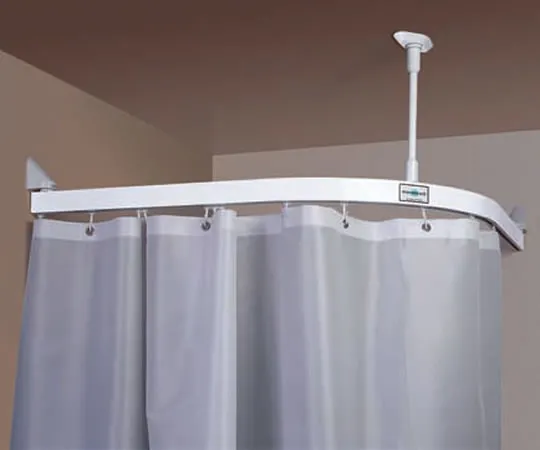
Hospital privacy curtains do more than separate beds and treatment areas. They provide practical solutions for maintaining patient confidentiality, improving room functionality, and managing shared healthcare spaces. From emergency departments and intensive care units to outpatient clinics and patient rooms, the right curtain system can make everyday healthcare operations easier.
On The Right Track (OTRT) provides healthcare privacy curtain solutions designed to help facilities manage patient privacy and curtain replacement more efficiently. With innovative Hookless® technology, disposable and textile curtain options, and practical curtain management solutions, OTRT helps healthcare professionals create functional and comfortable environments for patients and staff.
Hospital privacy curtains are specialized fabric or disposable barriers used to separate patient beds, examination spaces, treatment areas, and other shared sections within healthcare facilities. Unlike standard residential curtains, medical privacy curtains are designed for demanding healthcare environments where durability, maintenance, accessibility, and hygiene are important considerations.
These curtains are commonly installed on ceiling-mounted or wall-mounted track systems, allowing healthcare staff to open and close them whenever necessary. Many hospital privacy curtains also feature a mesh section near the top to support airflow and accommodate healthcare facility requirements.
Privacy curtains are used in various healthcare settings, including:
Selecting the appropriate hospital curtain system helps healthcare facilities balance patient privacy, staff accessibility, maintenance requirements, and operational efficiency.
Healthcare environments frequently require multiple patients to receive care within shared rooms or treatment areas. Privacy curtains provide a practical way to create individual spaces without requiring permanent walls or major structural changes.
Patient privacy is an important part of respectful healthcare. During examinations, medical procedures, consultations, and personal care activities, patients deserve an environment where they feel comfortable and protected.
Hospital privacy curtains create temporary visual barriers between patients and surrounding areas. They allow medical professionals to perform routine tasks while helping patients maintain a greater sense of personal space.
For healthcare facilities with shared patient rooms, emergency treatment bays, and outpatient areas, privacy curtains provide a flexible solution for maintaining dignity throughout the care process.
Hospital privacy curtains are frequently touched by patients, healthcare professionals, visitors, and support staff. Like other frequently contacted surfaces, they should be included in facility cleaning and infection prevention procedures.
Choosing appropriate medical privacy curtains can make maintenance easier. Disposable options may simplify replacement in certain environments, while reusable textile curtains can be managed through established laundering procedures.
Healthcare facilities should establish curtain cleaning and replacement policies based on their infection prevention protocols, manufacturer instructions, and applicable healthcare guidance.
Healthcare employees need to move quickly between patient spaces while maintaining appropriate privacy. A well-designed curtain track system allows staff to open, close, and reposition curtains without unnecessary difficulty.
Easy-to-manage curtain systems can also simplify replacement procedures, reduce handling challenges, and support more organized maintenance routines.
The appearance of a healthcare environment can influence how patients feel during their visits. Privacy curtains are available in different colors, patterns, and fabric styles, allowing facilities to maintain a welcoming atmosphere.
Well-selected curtains help create organized treatment spaces while providing the privacy patients expect.
Different healthcare facilities have different operational requirements. Some prioritize convenient replacement, while others prefer durable fabrics that can be laundered and reused.
Understanding the available options helps healthcare administrators choose privacy curtains that match their facility's needs.
Disposable privacy curtains are designed for single-use or designated limited-use applications, depending on the manufacturer's instructions and facility policy.
These curtains can be useful in healthcare environments where frequent replacement is important or where facilities want to simplify curtain management.
Common advantages include:
Disposable hospital privacy curtains may be considered for emergency departments, high-turnover patient areas, and other healthcare environments where replacement convenience is a priority.
However, facilities should evaluate product specifications, replacement costs, disposal requirements, and applicable infection prevention policies before choosing a disposable solution.
Reusable textile privacy curtains are designed for repeated use through appropriate cleaning and laundering procedures.
They are commonly selected by healthcare facilities that have established textile management programs and prefer fabric solutions for their patient-care environments.
Important benefits include:
Reusable curtains can be a practical choice for patient rooms, treatment areas, clinics, and other healthcare spaces.
Facilities should review fabric specifications, laundering instructions, durability, and replacement requirements when evaluating textile curtains.
Healthcare spaces vary significantly in layout and dimensions. Standard curtain sizes may not accommodate every room configuration or treatment area.
Custom hospital privacy curtains allow facilities to select dimensions, materials, colors, and configurations according to their operational requirements.
Custom options can be especially useful for:
Before ordering custom curtains, facility managers should confirm measurements, track compatibility, mesh requirements, and installation specifications.
Choosing between disposable and reusable privacy curtains depends on the healthcare facility's budget, maintenance resources, cleaning procedures, and patient-care requirements.
Both options offer practical benefits, but their operational demands are different.
| Comparison | Disposable Privacy Curtains | Reusable Textile Curtains |
| Usage | Single or limited use | Repeated use |
| Maintenance | Replacement and disposal | Cleaning and laundering |
| Operational requirements | Replacement inventory | Laundry management |
| Design options | Varies by manufacturer | Multiple fabric options |
| Cost considerations | Recurring purchasing costs | Laundry, labor, and replacement costs |
| Sustainability | Depends on materials and recycling | Depends on lifespan and laundering impact |
| Best suited for | Facilities prioritizing replacement convenience | Facilities with established textile programs |
There is no universal solution for every healthcare facility.
A hospital with frequent patient turnover may prefer disposable options in selected areas. Another facility may find reusable textile curtains more suitable because it already operates an effective laundry and textile management program.
Healthcare administrators should compare total operating costs rather than focusing only on the initial purchase price.
Not all privacy curtains are designed for the same healthcare applications. Before purchasing, facility managers should consider several important features.
Hospital curtains experience regular movement, handling, and cleaning. Materials should be selected according to the expected usage, maintenance procedures, and manufacturer specifications.
Durable materials can help facilities maintain consistent performance while managing replacement requirements.
Many hospital privacy curtains feature a mesh section near the top. This design can support airflow and help facilities meet their room configuration requirements.
The appropriate mesh height and curtain dimensions should be determined according to the facility's specific needs.
Curtain replacement can become a time-consuming maintenance task, particularly in large healthcare facilities with numerous patient areas.
Systems designed for easier removal and installation can help staff complete curtain changes more efficiently.
A privacy curtain is only one part of the complete system. The track, attachment method, and replacement process also influence overall performance.
Before purchasing new curtains, verify that they are compatible with the existing track system or determine whether an upgraded system is required.
Healthcare facilities should select curtains with maintenance requirements that align with their infection prevention policies and operational resources.
Reusable curtains should have clear laundering instructions, while disposable options should have defined replacement and disposal procedures.
Healthcare administrators should evaluate applicable fire-performance requirements, product specifications, material information, and facility policies.
Where relevant, request manufacturer documentation to verify that selected curtains meet the requirements for their intended healthcare application.
Traditional hospital curtain systems can require staff to work with individual hooks or attachments when installing and removing curtains. In busy healthcare environments, these procedures may create additional handling and maintenance demands.
On The Right Track (OTRT) addresses this challenge with its Hookless® curtain technology.
The Hookless® system is designed to simplify curtain installation and removal by integrating the curtain attachment system into the curtain design.
This approach can help healthcare facilities manage their privacy curtains more efficiently.
Traditional curtains may require separate hooks that must be individually handled during installation and removal.
OTRT's Hookless® technology provides an integrated approach designed to make curtain changes easier.
The system helps simplify the process for healthcare maintenance teams while reducing the need to manage multiple individual attachments.
Hospitals regularly need to maintain patient rooms, treatment spaces, and other shared areas.
A curtain system designed for convenient removal and installation can help maintenance teams complete replacement procedures with less handling.
This can support more efficient room preparation and curtain management.
OTRT also offers the Grabber® as part of its curtain management solutions.
The Grabber® is designed to help staff change compatible privacy curtains from floor level, reducing the need to climb ladders during the replacement process.
This approach can help simplify maintenance workflows and reduce ladder-related handling requirements.
By combining innovative curtain attachment technology with practical replacement solutions, OTRT helps healthcare facilities approach curtain management as part of their overall operational strategy.
For hospitals managing multiple patient areas, these improvements can make routine maintenance easier to coordinate.
Healthcare facilities can explore OTRT's Hookless® solutions to understand how an updated curtain system may support their specific requirements.
Privacy curtains are suitable for a wide range of healthcare environments where patients need individual treatment or examination spaces.
Shared hospital rooms often require flexible barriers between beds. Privacy curtains help patients maintain personal space during examinations, consultations, and routine care.
Emergency departments manage changing patient volumes and frequently require flexible treatment spaces.
Medical privacy curtains help create individual care areas while allowing healthcare professionals to move between treatment spaces.
ICUs require organized environments where healthcare staff can access patients and medical equipment.
Privacy curtains provide visual separation when needed while supporting the layout of shared treatment areas.
Outpatient facilities use privacy curtains in examination rooms, consultation areas, and treatment spaces.
They offer a flexible way to establish patient privacy without requiring permanent partitions.
Dialysis facilities often accommodate several patients within a shared treatment environment.
Privacy curtains can help establish individual treatment spaces and improve patient comfort.
Long-term care and rehabilitation environments may use privacy curtains to support personal dignity during examinations, therapy sessions, and daily care activities.
Hospital privacy curtains should be maintained according to facility infection prevention policies, manufacturer instructions, and applicable healthcare guidance.
There is no single replacement schedule that applies to every curtain type and healthcare environment.
Several factors can influence replacement frequency.
Visible contamination: Curtains contaminated with blood, body fluids, or other potentially infectious materials should be managed promptly according to facility protocols.
Patient discharge or transfer: Some healthcare facilities include curtain inspection, cleaning, or replacement as part of their patient turnover procedures.
Cleaning and laundering schedules: Reusable textile curtains should follow established laundering procedures based on manufacturer instructions and facility requirements.
Disposable curtain policies: Disposable products should be replaced according to their intended usage, product instructions, and facility policies.
Environmental conditions: High-traffic treatment areas may require more frequent inspection and maintenance than lower-use spaces.
Healthcare administrators should establish documented procedures that explain when curtains must be inspected, cleaned, removed, or replaced.
Including privacy curtains in routine environmental cleaning and infection prevention programs helps facilities maintain consistent practices.
Selecting the right privacy curtains requires more than comparing colors and prices. Healthcare facilities should evaluate how the curtain system will perform within their daily operations.
Consider these factors before making a purchasing decision.
1. Identify your facility's requirements
Determine whether the curtains will be used in patient rooms, emergency departments, ICUs, examination rooms, or other treatment spaces.
Different applications may require different materials, dimensions, and replacement procedures.
2. Choose between disposable and reusable options
Evaluate the advantages of disposable and reusable curtains based on your facility's cleaning procedures, staffing resources, and long-term costs.
3. Confirm curtain measurements
Measure the required width and height, including the track configuration and any mesh requirements.
Accurate measurements help prevent installation difficulties and unnecessary product adjustments.
4. Review curtain track compatibility
Confirm whether the selected curtains work with your existing curtain track system.
If your current system creates maintenance challenges, consider whether an upgraded curtain attachment system would be beneficial.
5. Evaluate cleaning and replacement procedures
Consider how frequently curtains are handled, how they are cleaned, and how replacement inventory will be managed.
A practical system should support your facility's daily maintenance workflow.
6. Consider long-term operating costs
Look beyond the initial product price. Include labor, laundering, replacement inventory, disposal, installation, and maintenance costs when comparing solutions.
7. Review sustainability options
If sustainability is a priority, investigate available recycling programs, material composition, packaging, and the environmental impact of cleaning and replacement.
A well-planned purchasing decision can help healthcare facilities select privacy curtains that support both patient needs and operational goals.
Healthcare facilities need more than a basic curtain. They need a practical solution that supports patient privacy, maintenance efficiency, and daily healthcare operations.
On The Right Track (OTRT) focuses on healthcare privacy curtain solutions designed around these requirements.
OTRT's patented Hookless® technology provides an alternative to traditional curtain attachment systems. Its integrated design helps simplify installation and removal.
Healthcare facilities have different preferences and maintenance requirements. OTRT provides privacy curtain solutions that help facilities evaluate options for their particular environments.
The Grabber® helps simplify compatible curtain replacement procedures from floor level, reducing the need for ladder-based changes.
OTRT understands that curtain management is part of maintaining an organized healthcare environment. Its solutions focus on making curtain installation, removal, and replacement more manageable.
Healthcare facilities increasingly consider the environmental impact of their purchasing and maintenance decisions.
Where eligible, recycling programs and appropriate product choices can help facilities evaluate more sustainable curtain management practices.
By combining specialized curtain solutions with practical replacement technology, OTRT helps healthcare facilities approach patient privacy and curtain maintenance more effectively.
Privacy curtains separate patient beds, examination areas, and treatment spaces. They provide visual barriers that help patients maintain dignity and personal space during medical care.
The terms are often used interchangeably in healthcare settings. Both describe curtains used to create private spaces around patient beds and treatment areas. The specific product design may vary depending on the facility and curtain system.
Yes. Hospitals can choose disposable privacy curtains designed for replacement or reusable textile curtains designed for repeated laundering and use. The best option depends on facility policies, maintenance requirements, and operational costs.
Replacement frequency depends on contamination, facility infection prevention procedures, product instructions, and cleaning schedules. Healthcare facilities should establish documented policies for inspecting, cleaning, and replacing curtains.
Some disposable privacy curtains may be eligible for recycling through manufacturer or specialized recycling programs. Eligibility depends on the material, contamination status, and program requirements.
The appropriate size depends on the room layout, curtain track dimensions, ceiling height, and required coverage. Facilities should measure the installation area and consult product specifications before ordering.
A hookless hospital privacy curtain system uses an integrated attachment design rather than requiring separate individual hooks. OTRT's Hookless® technology is designed to make curtain installation and removal easier.
Privacy curtains can be included in healthcare environmental cleaning and infection prevention programs. Facilities should follow established cleaning, laundering, and replacement procedures because frequently handled curtains can become contaminated.
Many healthcare privacy curtain solutions are available in different sizes, colors, patterns, and configurations. Customization depends on the manufacturer's available products and the facility's specific requirements.
Facilities can evaluate curtain systems designed for easier installation and removal. OTRT's Hookless® technology and Grabber® replacement tool offer practical solutions for managing compatible privacy curtains.
Creating a comfortable and functional healthcare environment starts with selecting the right products for everyday patient care. Hospital privacy curtains help protect patient dignity, organize shared treatment areas, and support efficient healthcare operations.
Whether your facility needs disposable privacy curtains, reusable textile solutions, or an improved curtain replacement system, selecting the right combination can make a meaningful difference in daily maintenance.
On The Right Track (OTRT) offers healthcare-focused curtain solutions featuring innovative Hookless® technology and practical curtain management options.

This post has been authored and published by one of our premium contributors, who contribute researched and informative content to our platform.