Legal disputes are a reality for individuals and businesses alike. Whether it’s a contractual disagreement, a professional negligence claim, or a complex commercial conflict, resolving disputes requires a structured legal approach. This is where a litigation lawyer plays a critical role.
In Sydney, litigation lawyers help clients navigate disputes within the Australian legal system, ensuring matters are handled lawfully, efficiently, and with due process. This article explains what a litigation lawyer does, how they assist clients, and when engaging Expert Litigation & Dispute Resolution Lawyers may be appropriate.
Litigation refers to the formal process of resolving disputes through courts or tribunals. In New South Wales, civil litigation is governed by established procedures designed to promote fairness, efficiency, and access to justice.
Courts encourage parties to resolve disputes early where possible, but when matters cannot be settled, litigation becomes the structured pathway to achieve a legally binding outcome.
A lawyer for litigation assists clients throughout this process—from early advice to representation in court—while ensuring compliance with procedural rules and legal obligations.
A litigation lawyer is a legal professional who represents individuals, businesses, and organisations in disputes that may proceed to court or tribunal hearings. Their work spans both dispute resolution and courtroom advocacy.
Litigation lawyers in Sydney commonly practise in areas such as:
While litigation often involves court proceedings, many cases are resolved before trial through negotiation, mediation, or arbitration.
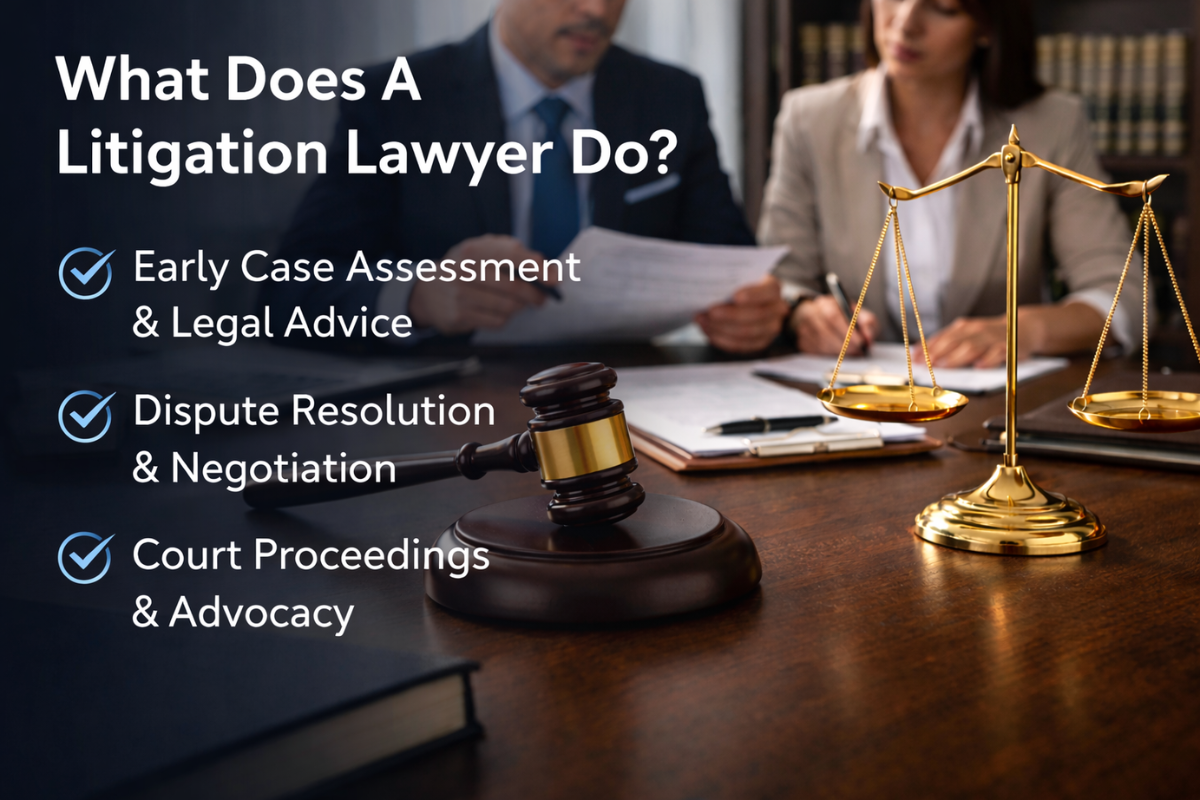
One of the most important roles of a litigation lawyer is evaluating the strength of a claim or defence at an early stage. This includes:
This early guidance helps clients make informed decisions before committing to formal proceedings.
Australian courts strongly encourage parties to attempt resolution before litigation progresses. Dispute Resolution lawyers play a key role in this phase by:
Effective dispute resolution can reduce legal costs, preserve relationships, and achieve faster outcomes compared to lengthy court proceedings.
When disputes cannot be resolved, a litigation lawyer prepares and manages all aspects of court proceedings, including:
In New South Wales, civil matters may be heard in courts such as the Local Court, District Court, or Supreme Court, depending on the complexity and value of the claim.
Litigation lawyers advocate for their clients during hearings, interlocutory applications, and trials. Their role is to:
Strong advocacy ensures a client’s position is properly represented within the boundaries of Australian law.
After a dispute is resolved, litigation lawyers also assist with:
Legal outcomes are only effective if they can be implemented, making this phase equally important.
While litigation involves formal court proceedings, dispute resolution lawyers focus on resolving conflicts without a trial where possible. In practice, both approaches are closely connected.
Most litigation matters in Sydney involve a combination of:
Engaging Expert Litigation & Dispute Resolution Lawyers ensures both pathways are considered strategically rather than defaulting to court action prematurely.
Litigation lawyers assist with a wide range of civil disputes, including:
Many disputes involve overlapping legal principles, making specialised legal advice essential.
You may benefit from speaking with a lawyer for litigation if:
In some situations, understanding whether a legal duty has been breached is critical. A clear explanation of when negligence becomes actionable in Australian civil law can help clarify how courts assess liability and responsibility.
This resource explains when negligence crosses the threshold into a legally actionable claim under Australian civil law.
Litigation involves procedural rules, evidentiary standards, and statutory obligations that can be difficult to navigate without legal training. Experienced litigation lawyers understand:
Their role is not simply to argue a case, but to guide clients toward the most appropriate and proportionate resolution.
Australian lawyers are subject to strict professional and ethical standards. Litigation lawyers must:
These standards are designed to protect clients and maintain public confidence in the legal system.
A litigation lawyer plays a vital role in helping individuals and businesses resolve disputes within Sydney’s legal framework. From early advice and dispute resolution to court representation and enforcement, their expertise ensures matters are handled correctly and fairly.
Whether you are facing a contractual disagreement, a civil claim, or a complex dispute, understanding the role of Dispute Resolution lawyers and when to seek assistance from Expert Litigation & Dispute Resolution Lawyers can help you make informed legal decisions.
As with all legal matters, timely advice is critical. Seeking guidance early can often prevent disputes from escalating and lead to more efficient outcomes.
Disclaimer: This article is provided for general informational purposes only and does not constitute legal advice. Legal outcomes depend on individual circumstances. For advice specific to your situation, consult New South Lawyers, a leading Sydney law firm, or another qualified Australian legal professional.

This post has been authored and published by one of our premium contributors, who are experts in their fields. They bring high-quality, well-researched content that adds significant value to our platform.