For most medical providers, the real focus is patient care. That is where the energy goes, and rightly so. But behind every smooth patient visit, there is a long list of administrative tasks keeping the practice afloat. One of the most important, and most overlooked, is credentialing.
It is not flashy. It is not something patients see. Still, it affects nearly every part of a provider’s financial health. If credentialing is delayed, claims may not get paid on time. If it is handled poorly, providers can face enrollment issues with insurance networks. If it is ignored, the practice can end up losing revenue without realizing where the problem started.
That is why many practices now turn to medical credentialing services for support. In many cases, they also work closely with a medical billing Company to make sure the business side of care stays organized from day one.
A lot of people outside the industry assume credentialing is simply filling out forms and sending them to insurance payers. In reality, it is much more involved than that.
Credentialing is the process of verifying a provider’s qualifications, licenses, training, work history, certifications, and other professional details before they can participate in payer networks. It sounds straightforward until a practice has to deal with multiple insurers, different submission rules, constant follow-ups, revalidations, and missing documents.
That is when the process becomes a burden.
For a busy office, even one delay can cause a ripple effect. A provider may begin seeing patients but still not be fully enrolled with a payer. Claims may sit unpaid. Staff may spend hours calling insurance companies just to get an update. What should have been routine suddenly turns into a mess.
The biggest challenge is not that credentialing is impossible. The challenge is that it requires time, precision, and persistence. Most practices are already stretched thin. Front desk teams are answering phones, checking in patients, verifying eligibility, and managing daily office flow. Office managers are handling staffing, compliance concerns, and operational headaches. Providers themselves are focused on clinical responsibilities.
In that environment, credentialing often gets pushed aside or rushed through.
That is where errors happen. A missing signature, outdated license, incorrect tax ID, or incomplete application can delay approval for weeks. These are small details, but in medical administration, small details often lead to expensive consequences.
Professional medical credentialing services take that responsibility off the shoulders of in-house staff and place it in the hands of people who deal with the process every day. That matters because experience makes a difference.
A credentialing team knows what each payer usually asks for. They know how to organize provider information correctly. They know when to follow up, what to track, and how to reduce avoidable delays. Instead of treating credentialing like an occasional office task, they treat it like an ongoing system.
That support can make life much easier for medical providers.
One of the first benefits is speed. When applications are completed properly the first time, enrollment tends to move faster. That helps providers get connected with payer networks sooner, which means the practice can begin billing without unnecessary interruptions.
Another major benefit is accuracy. Credentialing is detail-driven work. A strong service helps reduce mistakes that can hold up approvals or create problems later. For practices that have already dealt with denied claims tied to enrollment issues, that kind of accuracy is not a luxury. It is essential.
Most providers feel the impact of credentialing in one place first: revenue.
If a provider is not enrolled correctly, the practice may not be able to bill certain insurance plans. If re-credentialing deadlines are missed, participation issues can follow. If enrollment records do not match billing records, claims may be rejected or delayed. All of this puts pressure on cash flow.
That is why credentialing should never be separated from the broader revenue cycle conversation.
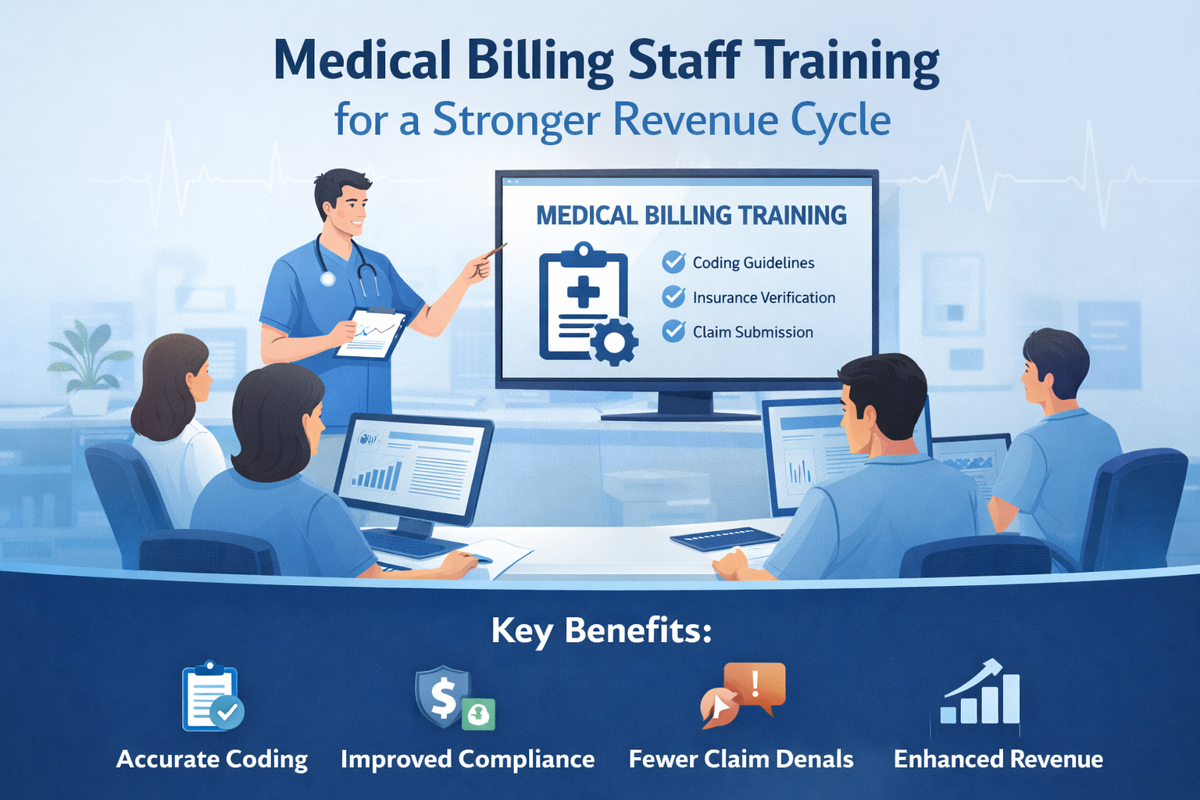
A reliable medical billing Company understands this connection well. Billing can only run smoothly when provider information is accurate and payer enrollment is active. In other words, clean claims begin long before claim submission. They begin with proper setup.
When medical credentialing services and billing support work together, practices are usually in a much stronger position. Fewer things fall through the cracks. Staff waste less time fixing enrollment-related denials. Payments move more smoothly because the foundation is stronger.
Another benefit that often gets overlooked is the relief it brings to the office team.
Credentialing is one of those jobs that keeps coming back. It is not a one-time task that disappears after enrollment is approved. Providers have renewals. Payers request updates. CAQH profiles need attention. Group changes have to be reported. New locations and new hires bring new rounds of paperwork.
When all of that lands on already busy staff, frustration builds fast.
Outsourcing this work gives practices room to breathe. Staff can focus on patient scheduling, front-office communication, and day-to-day operations instead of chasing credentialing deadlines. That improves workflow and usually improves morale as well.
A smoother back office creates a better experience for everyone involved, including patients.
Credentialing support becomes even more valuable when a practice is growing.
Adding a provider should feel like progress, not chaos. Opening a new location should create opportunity, not billing confusion. But growth tends to expose weak systems very quickly. If credentialing is not handled properly during expansion, the financial upside of growth can get delayed.
That is one reason expanding groups often rely on both medical credentialing services and a trusted medical billing Company. Growth is easier to manage when the administrative side is already structured.
Instead of scrambling every time something changes, the practice has a process in place. That leads to fewer surprises and a smoother path forward.
Credentialing may not be the most visible part of running a practice, but it is one of the most important. It affects payer participation, reimbursement, compliance, and operational stability. When handled well, it supports the business side of medicine quietly and effectively. When handled poorly, it creates problems that can take months to untangle.
That is why so many providers now see real value in professional medical credentialing services. They save time, reduce errors, and help practices stay financially healthy. And when paired with the right medical billing Company, they create a stronger system for long-term success.
In healthcare, good care needs a strong operational backbone. Credentialing is part of that backbone. Treat it seriously, and the whole practice stands taller.

This post has been authored and published by one of our premium contributors, who are experts in their fields. They bring high-quality, well-researched content that adds significant value to our platform.